Are Personality Tests Accurate?                                   

Introduction 

In psychology personality tests are widely utilised and serve as crucial tools to predict behaviours and gauge individual traits across a variety of contexts. The efficacy and accuracy of personality tests are however frequently contested, despite their widespread usage. These tools range from simple questionnaires to complex clinical instruments and have been praised for their ease of administration and a potential depth of insight into humankind. Alongside criticism for potential biases such as participants responding in socially desirable ways and cultural inapplicability (Wiener & Green, 2017).

Popularity and Challenges of Self-Report Measures 

With rich, introspective insights and an ease of administration personality tests, particularly self-report questionnaires have become very popular. However, the way that participants behave during testing can significantly alter and compromise validity. Acquiescence bias, a tendency to agree with questions regardless of the content, and social desirability bias, where participants respond in a manner they perceive as favourable rather than truthfully, are significant challenges (Gudjonsson & Young, 2011; Morales-Vives et al, 2014). These behaviours highlight the issues of validity and reliability in these tests and reflect the complex dynamics between human psychology and test design.  

Theoretical Assumptions and Real Concepts 

The idea that certain behaviours and traits can be measured quantitatively and predicted over time has become the foundation that many personality tests rest on. However, this is a point of contention, the question is whether these tests measure real, stable constructs or potentially just a snapshot of a person’s situation or mood at that time. This debate focus’ in on the centre of personality psychology; the change versus stability paradigm, which questions whether personality traits are consistent over time or subjective and can change due to personal development or situational factors.  

Applicability Beyond WEIRD Contexts 

The development of most personality assessments within WEIRD (Western, Educated, Industrialised, Rich, and Democratic) societies raises concerns about their validity and applicability across diverse cultural settings (Henrich et al, 2010; Muthukrishna et al, 2022). 

 When so many tests are standardised and normed on populations that do not represent global diversity, this potentially leads to biased conclusions and interpretations when these tools are applied in non-WIERD contexts. This is a crucial factor for consideration, as the cultural limitations they possess affect the global utility of personality tests, which challenges the relevance and universality across different societies and cultures. 

Conclusion

Personality tests remain valuable tools for understanding individual traits and behaviours across different settings. However, the challenges of biases, theoretical assumptions about trait stability, and cultural limitations call for a careful and critical approach to their application. Recognising these issues highlights the need for ongoing refinement and diversification in test design, ensuring that these assessments can more accurately reflect the complexities of human psychology. For personality tests to maintain their relevance and validity, they must evolve to address the diverse realities and cultural contexts of the individuals they aim to assess.

References

Bleidorn, W., Schwaba, T., Zheng, A., Hopwood, C. J., Sosa, S. S., Roberts, B. W., & Briley, D. A. (2022). Personality stability and change: A meta-analysis of longitudinal studies. Psychological Bulletin, 148(7-8). https://doi.org/10.1037/bul0000365

Gudjonsson, G. H., & Young, S. (2011). Personality and deception. Are suggestibility, compliance and acquiescence related to socially desirable responding? Personality and Individual Differences, 50(2), 192–195. https://doi.org/10.1016/j.paid.2010.09.024

Henrich, J., Heine, S. J., & Norenzayan, A. (2010). The Weirdest People in the World? SSRN Electronic Journal, 33(2-3). https://doi.org/10.2139/ssrn.1601785

Morales-Vives, F., Vigil-Colet, A., Lorenzo-Seva, U., & Ruiz-Pamies, M. (2014). How social desirability and acquiescence affects the age–personality relationship. Personality and Individual Differences, 60, S16. https://doi.org/10.1016/j.paid.2013.07.370

Muthukrishna, M., Bell, A. V., Henrich, J., Curtin, C. M., Gedranovich, A., McInerney, J., & Thue, B. (2020). Beyond Western, Educated, Industrial, Rich, and Democratic (WEIRD) Psychology: Measuring and Mapping Scales of Cultural and Psychological Distance. Psychological Science, 31(6), 095679762091678. https://doi.org/10.1177/0956797620916782

Wiener, I. B., & Greene, R. L. (2017). Handbook of personality assessment. John Wiley & Sons, Inc.

Can stress can be adaptive as well as maladaptive?

Stress has long been understood as an intricate and prevalent phenomenon with both adverse and constructive consequences, impacting people across diverse domains and life stages. Drawing from established psychological theories, this essay recognises stress as a complex force, delving into the determinants of its manifestation, while exploring its dual nature as both detrimental and beneficial influence. 

The contemporary biopsychosocial model of stress (Rith-Najarian et al., 2014) and Lazarus and Folkman’s transactional model (1984) highlight stress’s adaptive facet, which is triggered when individuals manage and assess challenges within their coping framework. Neurologically we see the hippocampus, a crucial brain region, discerning stress types (McEwen & Morrison, 2013). Stress can spur individuals to solve problems, act and become motivated, foster personal growth, performance and build resilience. Denoted as ‘eustress’ (Hargrove et al., 2013).  

Activation and process of the physiological stress response cultivates effective coping mechanisms and adaptation to changing circumstances, offering invaluable learning opportunities for skill acquisition and personal growth (Laine & Shansky, 2022). This adaptive perspective perceives stress as integral to life, offering ongoing room for human development. 

Conversely, stress can also be maladaptive. Persistent overwhelming of an individual’s coping resources leads to chronic stress, with a sustained activation of the stress response adversely affecting physical and mental health. Allostatic load, the stress response’s wear and tear can influence concerns like cardiovascular disease and psychiatric disorders (McEwen & Gianaros, 2010; McEwen & Stellar, 1993). 

As far back as 1908 the Yerkes-Dodson law proposed an inverted u-shape relationship between performance and stress, revealing excessive stress will impair performance and cognitive function (Yerkes & Dodson, 1908). Subsequent research has outlined the issues of excessive stress in a multifactorial way. Demonstrating the negative consequence on memory capacity, decision-making, problem solving and attentional deficits. Additionally, affecting well-being, mental health and emotional exhaustion (Arnsten, 2009; Dedovic et al., 2009). 

Different theories of stress, such as the General Adaptation Syndrome (Cambell et al.,2013), the Allostatic Load Model (McEwen & Stellar, 1993) and Biopsychosocial Model (Rith-Najarian et al., 2014), provide frameworks to understand the nature of stress. These theories acknowledge stress’s outcome depends on individual variances, coping approaches, and socio-environmental contexts. 

The Transactional Model (Lazarus & Folkman, 1984) and more recently the underpinnings of cognitive behavioural therapies underline the significance of cognitive appraisal on determining the stress response (Beck, 2005; Nakao et al., 2021). These models recognise the subjectivity of stress and what role our own assumptions, beliefs and associations play on whether stress will be adaptive or maladaptive. 

In conclusion, stress is a multifaceted phenomenon exerting maladaptive and adaptive effects on the individual. Understanding this dual nature elucidates stress’s implications for health and wellbeing. As a construct stress serves as a motivating force towards adaptation but can become chronic when overwhelming coping resources yield a variety of negative outcomes. Although no unified theory of psychological stress exists, existing frameworks offer crucial insights into the factors that determine whether stress becomes adaptive or maladaptive. Neuroimaging and epigenic advancements continue our comprehension (Nater, 2021). Stress and its psycho-biological aspects do not operate in isolation and are influenced by contextual factors.  By mastering the stress dynamic, we can mitigate maladaptive outcomes and progress towards adaptive states. 

References

Arnsten, A. F. T. (2011). Prefrontal cortical network connections: key site of vulnerability in stress and schizophrenia. International Journal of Developmental Neuroscience, 29(3), 215–223. https://doi.org/10.1016/j.ijdevneu.2011.02.006

Beck, A. T. (2005). The Current State of Cognitive Therapy. Archives of General Psychiatry, 62(9), 953. https://doi.org/10.1001/archpsyc.62.9.953  

Campbell, T.S., Johnson, J.A., Zernicke, K.A. (2013). General Adaptation Syndrome. In: Gellman, M.D., Turner, J.R. (eds) Encyclopedia of Behavioral Medicine. Springer, New York, NY. https://doi.org/10.1007/978-1-4419-1005-9_1135

Dedovic, K., D’Aguiar, C., & Pruessner, J. C. (2009). What Stress Does to Your Brain: A Review of Neuroimaging Studies. The Canadian Journal of Psychiatry, 54(1), 6–15. https://doi.org/10.1177/070674370905400104 

Lazarus, R. S., & Folkman, S. (1984). Stress, appraisal, and coping. Springer. 

Hargrove, M. B., Becker, W. S., & Hargrove, D. F. (2015). The HRD Eustress Model. Human Resource Development Review, 14(3), 279–298. https://doi.org/10.1177/1534484315598086 

Laine, M. A., & Shansky, R. M. (2022). Rodent models of stress and dendritic plasticity – Implications for psychopathology. Neurobiology of Stress, 17, 100438. https://doi.org/10.1016/j.ynstr.2022.100438 

McEwen, Bruce S., and John H. Morrison. “The Brain on Stress: Vulnerability and Plasticity of the Prefrontal Cortex over the Life Course.” Neuron, vol. 79, no. 1, July 2013, pp. 16–29, https://doi.org/10.1016/j.neuron.2013.06.028.

McEwen, B. S., & Gianaros, P. J. (2010). Central role of the brain in stress and adaptation: Links to socioeconomic status, health, and disease. Annals of the New York Academy of Sciences, 1186(1), 190–222. https://doi.org/10.1111/j.1749-6632.2009.05331.x 

McEwen, B. S., & Stellar, E. (1993). Stress and the individual. Mechanisms leading to disease. Archives of Internal Medicine, 153(18), 2093–2101. https://doi.org/10.1001/archinte.153.18.2093 

Nakao, M., Shirotsuki, K., & Sugaya, N. (2021). Cognitive–behavioral therapy for management of mental health and stress-related disorders: Recent advances in techniques and technologies. BioPsychoSocial Medicine, 15(1). https://doi.org/10.1186/s13030-021-00219-w 

Nater, U. M. (2021). Recent developments in stress and anxiety research. Journal of Neural Transmission, 128(9), 1265–1267. https://doi.org/10.1007/s00702-021-02410-3 

Rith-Najarian, L. R., McLaughlin, K. A., Sheridan, M. A., & Nock, M. K. (2014). The biopsychosocial model of stress in adolescence: self-awareness of performance versus stress reactivity. Stress (Amsterdam, Netherlands), 17(2), 193–203. https://doi.org/10.3109/10253890.2014.891102 

Yerkes, R.M., & Dodson, J.D. (1908). The Relation of Strength of Stimulus to Rapidity of Habit Formation. Journal of Comparative Neurology & Psychology, 18, 459–482. https://doi.org/10.1002/cne.920180503 

Understanding Human Belonging Across the Lifespan

Belonging. To be accepted. A subjective experience, one that hinges on the individual’s connection with groups and their wider community, the people, family and friends that surround them. According to Baumeister and Leary (1995) the need to belong is fundamental, a need that is so desirable and innate that it drives much of human behaviour and as suggested may even be more of a priority than Maslow’s hierarchy of needs originally suggests (Pichere & Cadiat, 2015). More fluid than the attachment theories and an appropriate and relevant subject as we begin to attempt a return to homeostasis after the years of pandemic that have swept the world and kept our sense of belonging adrift. 

The need to belong is universal and can be witnessed across all cultures and times. Friendships are one aspect of the human experience in which we can experience belonging. If friendships are positive, they can provide a sense of acceptance, emotional support, narrative and companionship through the ups and downs of life. The need to belong is met through social interactions; sharing common ideas, values and interests. All of which have been strained through the recent pandemic. 

Many great thinkers have deliberated over the construct of belonging. We have seen the progression from Maslow’s hierarchy and its primary individualistic division of our basic needs, with belonging being an important midway point. Through attachment theory routes, with the Minnesota Longitudinal studies in the 1970s, and other researchers, thereafter, showing us clear patterns of how our upbringing can impact our adult and ongoing relationship structures (Duschinshy, 2020; Mikulincer & Shaver, 2007; 2018). Which as a theory of development within our intimate relationships has parallels with the fundamental and strong effect of belonging, particularly on our emotional and cognitive processes.   

An understanding of our sense of belonging, specifically within interpersonal relationships in a post pandemic world will be useful to support societies that feel disconnected as a result of the extreme social isolations. At a time when innovation is high, and technology is booming an exploration of how connected we are to each other will be critical. 

Social dynamics, group bonds and relationships are central to a sense of belonging and within the belongingness hypothesis it suggests that, specifically for interpersonal relationships, that people spend much of their cognitive processes and energy thinking about these connections. 

We can also see the negative impact of not belonging, of feelings of isolation and loneliness. That this can lead to ill effects on one’s mental and physical health. As humans we feel pain when we are separated from our connections, it is felt as a threat to our most basic survival. Isolation at its core is often referred to as a social separation syndrome. 

The unprecedented social distancing strategies used in the COVID-19 pandemic to reduce and successfully contain the transmission of the virus, gave way to an increase in social isolation and loneliness that we have never seen before, having a severe impact on physical and mental health (Hwang et al, 2020). These distancing strategies affected individual and community social capital, the abilities to form connections via bonding approaches, being close to one another and taking part in culturally normal day to day activities. The polar nature of discourse throughout the pandemic also affected bridging capital, on people’s abilities to be able to connect and belong harmoniously through the sharing of data, values and ideas. Governments quickly realised that the reparation of this was going to be key to successful policy (Oronce & Tsugawa, 2021). And in the light of the human need to connect and belong we saw many resourceful and technological advances to support human connection even if we were unable to be with each other in person. 

We know that humans are social creatures, that there is a safety and natural reliance on being within groups or community, being the in-group and a recognition of our own social identity from within this (Hornsey, 2008). Being accepted and included become safety seeking behaviours when not present and if an individual is isolated or rejected there can be significant physical and psychological impact. Previous studies have demonstrated the benefits of engaging in close relationships, the associated benefits including better health and wellbeing (Chopik, 2017). Therefore, the implication is that friendship and connection with others will be important throughout the human lifeline.  

This report outlines survey research on the relevance of human belonging, specifically on friendships across the lifespan. Seeking to find data that will shed some light on the variations of connection that we see within our human need to belong and how this changes as we age, specifically post pandemic. Looking to provide further clarity on how people can increase their sense of belonging. From the results of our literature review we hypothesis: 

We presuppose that younger people may prioritise more frequent and intimate friendships whereas older people may prioritise less intense but more stable friendships (Nicolaisen & Thorsen, 2016). That there may be a depth or continuum of sense of belonging and that through the process of aging we may see those deeper connections form and expand within additional relationships. As we have seen in theories such as Social Penetration Theory (Altman & Taylor, 1973), that levels of self-disclosure impact the intimacy of friendships, and here we suggest that as age increases, this sense of disclosure may deepen in security allowing for an increase in the sense of belonging within friendships. 

If this is the case, it may demonstrate the need to support isolated, at risk and aging members of society, who are lacking in social connections, particularly post pandemic, to ensure that ongoing opportunities for friendships are considered.  

As a result of the COVID-19 pandemic this topic has received a huge amount of attention, but we are also in need of further understanding as to how the sense of belonging within friendships could be adapted to support at risk populations. There is a collective need to review how we feel about belonging after such seismic social shifts. 

To test our assumptions, we collected data via surveys from a sample of individuals using standardised, multi-item scale questions. Our reasoning for this is that it is an effective way to collect a large amount of data in a short time, given the goals of this research and the opinions that have emerged. The multi-item scales (Likert Scales) allowed for a deeper understanding of variables for the difficult and complex construct of belonging. 25 survey questions were developed by over 600 students, the most relevant of which were then applied to the survey. The scale was shown to have good reliability with a Cronbach’s Alpha score of .944, a measure of consistency and reliability specifically here looking at the construct of belongingness. 

A total of 3249 participants took part in the survey, of which 1023 were males, 2213 were females and 13 were other. These participants ranged in age from 18 to 92 years and had an average age of 40 years old (SD=13). Participants were provided with an online link to the survey, with individual reference numbers, supplied personal consent, completed the scale, were debriefed and thanked for participating.  

From here a correlation analysis was completed to examine the linear relationship between age and level of belonging. Looking at whether one of these variables predict the other, what strength and direction will these variables have and how it applies to our hypothesis. 

The survey data showed us that the mean belonging score was 3.84 (SD=.78), with a range of 1.00 to 5.00. Further to this we carried out a Pearsons Correlation, using the total belonging score of 76.83 (SD=15.58), as the minimum score was 20 and maximum 100.  The Pearsons value was r=-0.046 indicating a very weak negative correlation between age and total belonging. This weak tendency shows that there is no inclination for one variable to decrease as the other increases. The p-value was 0.996 which indicated that there is strong evidence against the null hypothesis. This p-value indicates that the correlation coefficient is not statistically significant. The probability of detecting a correlation coefficient as extreme as r=-0.046 by chance alone is high, with the result not being considered as important or meaningful. 

The evidence here points to the participants total belonging remaining consistent across the lifespan studied. That age did not have a statistical relevance on the individual’s sense of belonging. When we think about this in relation to friendships it may imply that friendships and our attachments to people also require consistency across the lifespan, not necessarily specific to any age bracket. So, rather than our hypothesis suggests that sense of belonging increases with age, we see that sense of belonging is important for people at all ages. For the purpose of this report, these findings suggest that people vulnerable to isolation at any age, particularly after the recent pandemic, need support to maintain and make new connections for ongoing friendships and support.  

Dunbar (2022) suggests the value of friendships across the lifeline, the number and quality, have a greater impact on our happiness and wellbeing than most other influences. Our literature review demonstrated that a sense of belonging is a subjective feeling that we are connected to our surroundings, communities, families and friends. That this human need can be witnessed from birth in our attachments and last a lifetime. The research we did shows that this subjective feeling stays consistent across the lifespan and that in this case to maintain a happy, healthy outlook and prospective future we need to support individuals that become isolated and are affected by loneliness, at any age or stage of life.  

Considering our initial thoughts about Social Penetration theory (Altman & Taylor, 1973) and the hypothesis that age may bring deeper levels of self-disclosure and thus sense of belonging within friendships. The results show us that levels of considerable sense of belonging are witnessed across the life span, this demonstrates that we can feel satisfaction and reciprocity from interpersonal relationships at any age. That age is not the deciding factor as to whether we will achieve a sense of belonging or how deep and responsive this may be. 

Previous research has identified that families that live in isolated and problematic social contexts are less likely to reproduce and transmit social capital (Prandini, 2014). Knowing how the pandemic has increased social isolation, seeing from our data that sense of belonging through social connection is similar for individuals across the lifespan, it makes sense that we are seeing a parallel increase in mental and physical health distress and issues within our populations (Gadermann et al, 2021; Galea et al, 2020; Razai at al, 2020). 

The limitations of this study come from the self-reported data within the survey, that the data we captured could hold bias. The survey questions although tested for reliability may still not capture the very complex nature of sense of belonging particularly nuances through different cultures and environments as all participants came from the United Kingdom. A wider and more diverse sample size and population would support the rectification of this is future studies. 

Although, the importance of tackling social isolation in our aging population is widely being recognised as an area of relevance and knowing that reciprocity of social connectedness is a crucial part of successful interventions (Sander, 2005; Eating, 2019). Our data, supports the need for future research in this outcome, at the point of intervention across the lifespan rather than just for those in older age. This is not to say that those in aging population are not most at risk of isolation, due to variety of social, environmental and cultural factors. But that when social isolation or loneliness shows up, particularly post-pandemic, that society and maybe particularly health and support providers need to be aware of the impact at any age and act. 

References 

Altman, I., & Taylor, D. (1973). Social penetration: The development of interpersonal relationships. New York, NY: Holt. 

Baumeister, R. F., & Leary, M. R. (1995). The need to belong: Desire for interpersonal attachments as a fundamental human motivation. Psychological Bulletin, 117(3), 497–529. https://doi.org/10.1037/0033-2909.117.3.497 

Chopik, W. J. (2017). Associations among relational values, support, health, and well-being across the adult lifespan. Personal Relationships, 24(2), 408–422. https://doi.org/10.1111/pere.12187 

Dunbar, R. (2022). Friends : Understanding the Power of Our Most Important Relationships. Little, Brown Book Group Limited. 

Duschinsky, R. (2020). Cornerstones of attachment research. Oxford University Press. 

Eating, H. (2019). Social isolation, Loneliness in Older People Pose Health Risks. National Institute on Aging. https://www.nia.nih.gov/news/social-isolation-loneliness-older-people-pose-health-risks 

Gadermann, A. C., Thomson, K. C., Richardson, C. G., Gagné, M., McAuliffe, C., Hirani, S., & Jenkins, E. (2021). Examining the impacts of the COVID-19 pandemic on family mental health in Canada: findings from a national cross-sectional study. BMJ Open, 11(1), e042871. https://doi.org/10.1136/bmjopen-2020-042871 

Galea, S., Merchant, R. M., & Lurie, N. (2020). The Mental Health Consequences of COVID-19 and Physical Distancing: the Need for Prevention and Early Intervention. JAMA Internal Medicine, 180(6), 817–818. https://doi.org/10.1001/jamainternmed.2020.1562 

Hornsey, M. J. (2008). Social Identity Theory and Self-categorization Theory: A Historical Review. Social and Personality Psychology Compass, 2(1), 204–222. https://doi.org/10.1111/j.1751-9004.2007.00066.x 

Hwang, T.-J., Rabheru, K., Peisah, C., Reichman, W., & Ikeda, M. (2020). Loneliness and social isolation during the COVID-19 pandemic. International Psychogeriatrics, 32(10), 1–15. https://doi.org/10.1017/s1041610220000988 

Mikulincer, M., & Shaver, P. R. (2007). Attachment in adulthood : structure, dynamics, and change. Guilford Press. 

Mikulincer, M., & Shaver, P. R. (2018). Attachment Theory as a Framework for Studying Relationship Dynamics and Functioning. The Cambridge Handbook of Personal Relationships, 175–185. https://doi.org/10.1017/9781316417867.015 

Nicolaisen M, Thorsen K. (2016) What Are Friends for? Friendships and Loneliness Over the Lifespan-From 18 to 79 Years. Int J Aging Hum Dev. 2017 Jan;84(2):126-158. doi: 10.1177/0091415016655166. Epub 2016 Jun 28. PMID: 27357305. 

Oronce, C. I., & Tsugawa, Y. (2021). Bonding and linking social capital are key determinants for successful pandemic policy. Social Science & Medicine, 287, 114376. https://doi.org/10.1016/j.socscimed.2021.114376 

Pichère, P., & Cadiat, A.-C. (2015). Maslow’s hierarchy of needs. Lemaitre.  

Prandini, R. (2014). Family Relations as Social Capital. Journal of Comparative Family Studies, 45(2), 221–234. https://doi.org/10.3138/jcfs.45.2.221 

Razai, M. S., Oakeshott, P., Kankam, H., Galea, S., & Stokes-Lampard, H. (2020). Mitigating the psychological effects of social isolation during the covid-19 pandemic. BMJ, 369(369), m1904. https://doi.org/10.1136/bmj.m1904 

Sander, R. (2005). Preventing social isolation and loneliness among older people: a systematic review of health promotion interventions. Nursing Older People, 17(1), 40–40. https://doi.org/10.7748/nop.17.1.40.s11 

How do young people view their relationship with Online Gaming?

Introduction and literature review: 

Here follows a meta-synthesis of four published papers on online gaming addiction. The purpose of the research is to investigate the costs of online gaming addiction by examining the subjective experience of vulnerable groups engaged, alongside enquiring if there are any benefits for these groups or the application of online gaming in the future. Four main overarching themes emerged from the research focusing on the educational application of gaming most specifically for young people balanced against the current evidence that gaming in its most popular state appears to have a multitude of side effects including the addictive nature of gaming and significant need for regulation. 

A literature review for the meta-synthesis was completed to reveal further thoughts about the area of online gaming addiction and to discover what other research has been completed in this area. The review consisted of an analysis of research papers from the University of Wolverhampton library Access BrowZine, PubMed and JSTOR. Using search terms such as ‘online gaming addiction’, ‘gaming addiction’ and ‘online gaming’. 

The review mainly uncovered a focus on the negative impact of online gaming for people, most specifically young people (Cisamolo at al, 2020; Yilmaz & Griffiths, 2018; Beranuy et al, 2013). Chen et al (2021) outline the significant neuro-cognitive changes and potential deficits that exist for people with gaming addictions. Alongside this, there seems to be a surge of interest in the civic potential that could arise if gaming was re-developed and it is the people with most power, governments and military forces, who are recognising this potential and how to harness it. Rather than the social services of our most at need, including in schools and education settings (Kahne et al, 2009; Shafer et al, 2005; Salen, 2007; Engerman et al, 2017). From this review a hypothesis emerged that young people are at risk of addiction and future manipulation within these systems.  

Further to this, the epigenetic consequences on the developing brain for addiction to gaming needs to be studied more. A parallel exists within the literature of epigenetic consequences of substance use addiction and disorders (Cadet & Jayanthi, 2021) and that of similar gaming addiction behaviours and psychological processes (Kuss & Grifiths, 2012). Recent research has identified that the addictive nature of substance misuse can cause changes in the epigenome, specifically modifying reward circuitry (Shepherd & Nugent, 2023). Within our investigation it is clear from the participants voice, and theme development, that there is an identification with behavioural patterns of addiction. What consequences will this have on the human epigenome? Specifically, humans identifying as male that are the main users of online gaming in addictive quantities.  

The literature search also brought up the interesting question of what to do with technology, like the gaming industry, that has great power, following and hold. When used for good there appears to be evidence that it could shift education productivity, engagement and enjoyment for the masses, but currently as Gee (2003) states “gaming is a capitalistic driven Darwinian process of selection of the fittest” (abstract). That appears to use Draconian systems and processes that appeal to the normalisation of violence that we are seeing increase throughout our societies (Prescott et al, 2018; Krzyzanowski, 2020). Interestingly, one meta-analysis looking at the relationship between violent video games and violent behaviours noticed the effect was largest in White ethnicity groupings. Putting forward some evidence that ethnicity alongside sex may be a modifier of this relationship (Prescott et al, 2018). 

The literature search produced enough material to make future suggestions of a meta-analysis in this area. But due to the restrictions of this unit and the specific qualitative papers provided for this investigation we continue here with the meta-synthesis to attempt to find a new understanding from the data we have, examining the meanings and experiences presented and adding a contribution to the field. 

Research question: 

From the literature review identifying the wider implications of gaming for young people’s development across their lifespan the following research question arose: 

How do young people view their relationship with online gaming and its addictive nature? 

Method: 

This paper attempts to address the need to aggregate current data systematically in the field of online gaming addiction by using the methodology of a meta-synthesis to capture and interpret existing data in four published papers. To organise and recognise themes using the method of thematic analysis, which allowed for a detailed exploration of patterns. 

As a result of the literature review, and the premise that there is an existing issue with online gaming addiction, a deductive approach to the thematic analysis occurred looking for codes to support either the enquiry towards structures that may reduce or diminish the addictive nature of gaming. Or in fact discover codes that identify the processes towards interventions that could become protective in nature for young people at risk of addictive gaming. These ideas became the framework to move forward with coding the data. As coding continued a recognition of novel themes emerged and that the existence of an inductive approach was also present, one that allowed space for the creation of new knowledge (Willig, 2022).  

A mixture of data driven semantic codes appeared in the initial coding, but as the transcripts were reviewed in additional analysis, and conversations within the team of coders, latent codes also appeared. This allowed for the surface and underlying meanings to be captured (Braun & Clark, 2013) 

Sample: Four published papers were provided by the University of Wolverhampton for the meta-synthesis, these can be found in appendices 1 to 4, alongside their coding and themes encapsulated within comments. The papers were published between 2013 and 2021 providing a selection from the last 10 years. The four papers came from the international community and were not based in the same area for collection of data, allowing for a good sample of research participants. Research participants in all 4 of the papers were young people, under the age of 18, who appear to be the focus and often main casualty of online gaming. In 3 of the paper’s participants were in education settings. One paper focused on individuals that were in treatment for their addiction to online gaming. It would be advantageous for future studies to include a wider age range and look at the impact of gaming via a longitudinal study into adulthood and beyond. 

Method of coding: The method of coding used for all four papers was a broad and complete coding aiming to discover all that was available rather than a specific data set (Braun & Clarke, 2013). Using organic familiarisation with the transcript recorded on Word with no assisted software. The four papers were coded by a team of researchers from the university who were able to meet on a variety of occasions to discuss coding, before common themes across all papers were analysed by authors individually. The findings and results section from each paper became the transcript that was inserted as data in one column of a Word document and in another column the search for codes began, via reading and familiarisation of the transcript. The author of this paper coded two papers, paper 1 (appendix 1) and paper 2 (appendix 2) and received two papers that had been coded by another group member (appendix 3 and 4). This allows for a broad double coded analysis of data, which should increase the reliability of findings (O’Connor & Joffe, 2020). 

Results: 

Development of Sub Themes within each paper. 

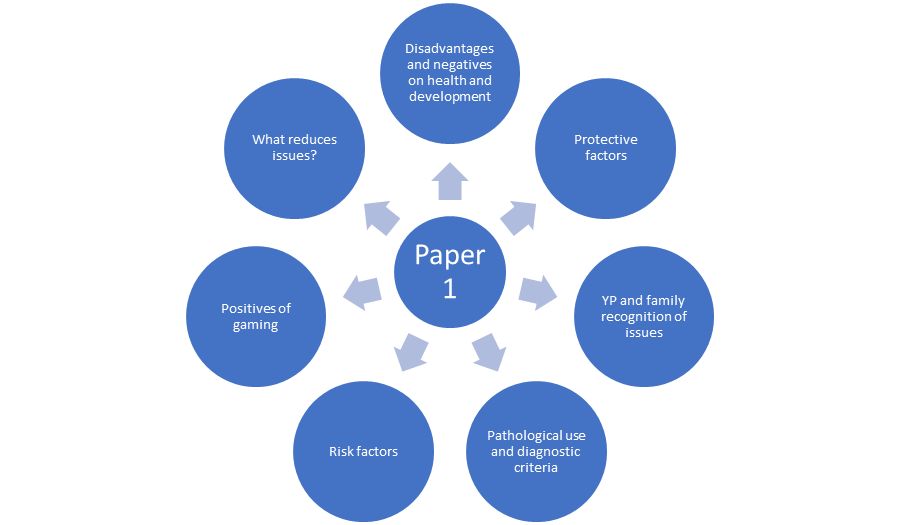
Diagram A. 

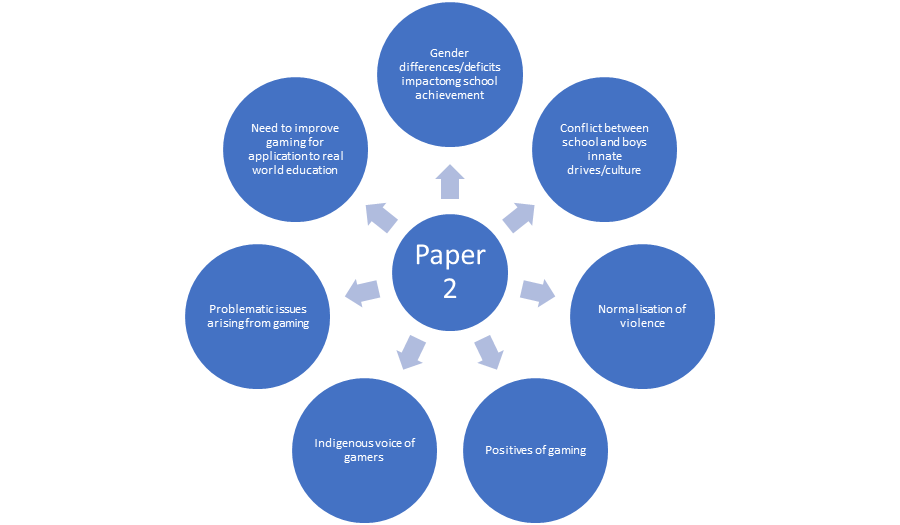
Diagram B. 

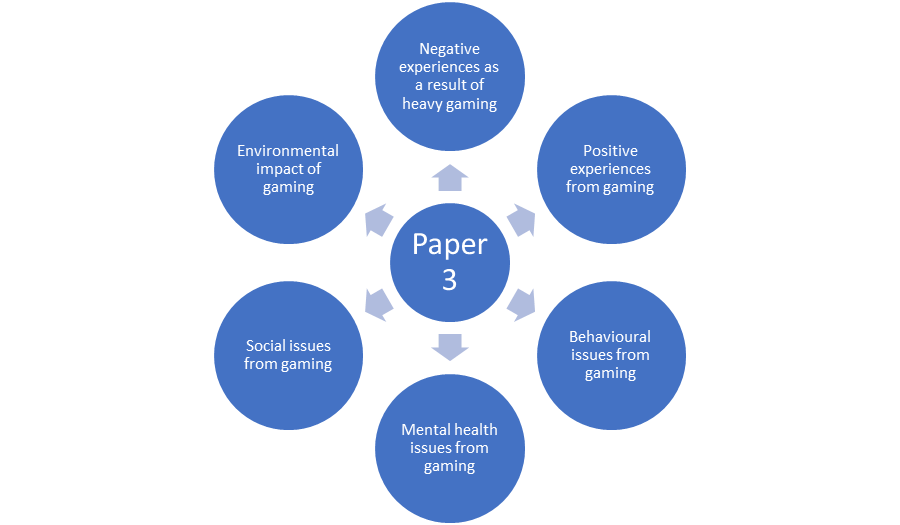
Diagram C. 

Diagram D. 

Development of Themes. 

Table 1. 

Theme Name How many times mentioned 
Advantages of online gaming   Acquisition of historical information  Development of critical reading skills  Development of meaning making   Language development  Development of strategy  Teamwork and collaboration  Literacy skill development  Gaming can support education and learning  Transferability of embodied actions and skills Learning opportunities  Enjoyment of learning transition to classroom Motivation  Communication skills  Leadership skills Communication skills    Disadvantages of online gaming   Confusion and distortions of reality  Addictive nature of gaming  Dangerous identification with characters  Violent interactions within gaming  Playing too long/often creates issues  Problematic relationships  Neglecting the real word  Mental health concerns – mood disturbance – variety of disturbances  Social isolation Bullying and aggressive behaviours towards others  Effects of video games on physical health  Recognition of negative impact on life for young people   Protective factors for addictive gaming   Access to screens and time management Indigenous voices Autonomy of access  Development of boy culture for real world application  Positive parental engagement creates protective factors Variety of family structure  Positive parental engagement high protective factor  Choosing less addictive games – regulation of play    Risk Factors for addictive gaming   Deleterious family and social environment  Alienation from traditional learning  Immersion and feelings of belonging – escapism  Feelings of hopelessness and isolation  Social status and relationships – competition increases usage  Significant playing time, neglecting real world, confusion of worlds Mental health issues possible risk factors  Congruent definition of pathological game use with DSMV    120   14 11 8 5 3 3 3 3 2 2  2 2 2 2   70   7 5 4 4 4 4 3   3 3   2 2   3   58   8 3 3   3   2 2   2   2    29   3 3   2 2   2   2 2   2 

Overview of results from analysis: 

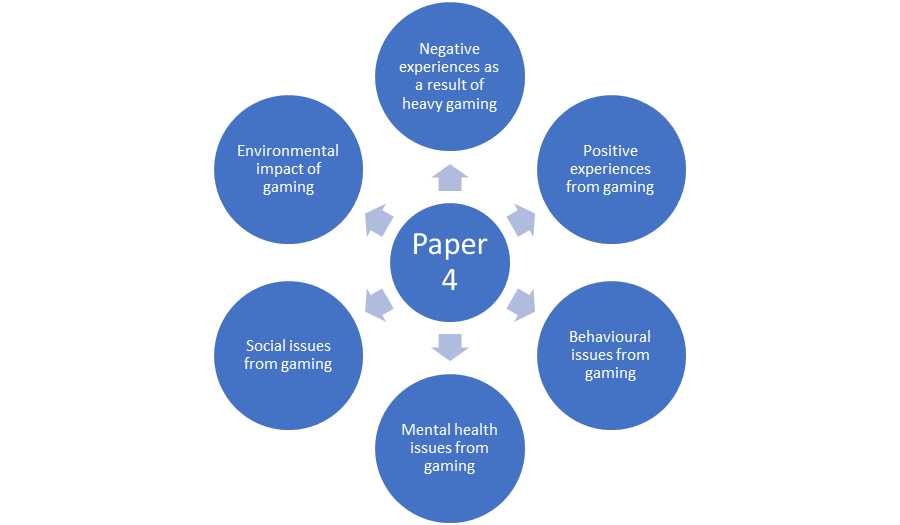
The initial subthemes as seen in diagrams A to D provided a fascinating overview and richness of the research and allowed themes to develop across all four papers.  

It is evident that there are some positive uses for online gaming (see table 1), that the potential for educational content is a real driver for change in the current environment. This is one of the main subthemes and we can hear researchers draw on this often. “Game[s] required such a large amount of reading that our respondents reported developing advanced vocabulary for their respective ages”.  Participants self-identified with this also, “I probably learned a lot of vocabulary from those games… believe it or not. Just cause it was constantly reading, reading, reading”. Educators “could use these immersive and engaging environments to separate fact from fiction elevating interest and driving critical analysis of content within reliable resources”

Specifically, the application and acquisition of historical data, this appears to be one of the main areas of positive interest for gamers particularly within paper 2 (appendix 2). This “may demonstrate that games have the potential to provide domain specific content along with transferrable learning opportunities”. An experience that is currently submerged in the gaming environment and one that could be improved on without gamer disconnection. As is evident in this participants synopsis: 

“Greg indicated, Probably, in social studies this year. We were talking about the war…. and I knew everything. … Yeah and I knew, Revolutionary War. I just really knew everything, and I know this other kid who played it, and he’s in my class and me and him just like (chuckles)… yeah, we knew everything. (Greg) Greg described the embodied experiences within the game and was proud of his ability to recount events for his classroom audience.—‘‘yeah, we knew everything’’. Greg’s excitement and confidence here also illustrated his attempt to make a connection between school literacies and his own life literacy practice” 

One of the issues currently however is the lack of accurate historical data within online gaming: “Although limited in factual data, respondents described experiences such as these as being highly meaningful to them”. The lack of accurate factual data and the risk factors for addictive behaviours, such as being alienated from mainstream education or those who come from “deleterious family and social environment” that may not scaffold the young person’s learning in anyway, are all disadvantages and risks of online gaming and pull the area subconsciously at times into chaos. There is a huge opportunity here to change the way that young people are educated and held in their innate learning spaces but these risk factors and more would need to be addressed. 

Outline of key themes that emerged: 

The key themes that emerged where the signifcant advantages and disadvantages of gaming for young people. Alongside this the risk for these young people to engage in addictive gaming and what protective factors were available to them. These became the central and organising concepts (Braun & Clark, 2013) of the research and gave grounds to make the following suggestions.  

Advantages – online gaming has a large potential to educate young people (Salen, 2007; Apperley & Walsh, 2012), particularly for young people at risk of exclusion from mainstream education (if the material becomes factual appropriate). The young people “described being motivated to communicate through speaking and listening as they socially played with peers, which improved their speaking and listening skills towards collective objective”. The data showed that there were many possibilities for education: 

“The boys described the ability to acquire and [use] accurately a range of general academic and domain-specific words and phrases sufficient for reading, writing, speaking, and listening at the college and career readiness level; demonstrate independence in gathering vocabulary knowledge when encountering an unknown term important to comprehension or expression”

Most importantly that through listening to what motivates young people, their indigenous voices, about what encourages learning opportunities and how this could be harnessed through gaming “this illustrates the power of interest driven learning” and what the future of gaming could be. 

Disadvantages – online gaming if done at high frequency, for specific populations of people can become a negative space in which addictive behaviours are paramount to any other. The data collected evidenced the following issues arising from online gaming:  

Affective problems, verbal problems, self-control problems, and behavioural problems. Focus group interviews indicate peers to suffer from heavy gamers’ bullying and physical assaults, claiming they do not obey classroom rules and neglect their educational and social responsibilities. Verbal problems include acts such as teasing and making fun of other individuals, using nicknames, and swearing” 

That heavy gamer “conversation is always somehow connected to video games, and this is boring” this detail came up regularly and demonstrates the impact on social and intimate relationships. This point also impacts the possibility of young people becoming isolated from peers and loosing themselves in gaming and away from reality, significantly “reported by gamers from their playing experiences is the escapism and/ or dissociation that gaming allows”. 

 Participants mentioned: “The fact that you can change your life. For what you are in the game”, ““I find myself dreaming about the game characters and scenes”, “escape other conflicts in their lives”, ““I thought it relaxed me but stressed me much because of the pressure my parents exerted on me. I played to forget almost everything”, “my mind disconnected”, “I lose control. I don´t know how much time has passed”. These are common statement across the four papers and demonstrate that users are often playing for escapism reasons. Alongside “the danger residing in the identification with ‘bad characters’ and the risk of committing regrettable acts (violence, substance dependence)”

There were so many disadvantages and here are just a few examples: “I started to get depressed and play more”, “poor academic performance”, “, not looking for a job, and/or working part-time to play in the afternoon”, “some cases lead to consequences such as forgetting to eat”. That it really showed the need to publicise and support users with more education around how to care for themselves whilst gaming and how to notice excess usage. 

Risk factors – specific risk factors such as “deleterious home environments” and young people at risk of exclusion, social isolation and mental health concerns are a very real concern. There was a huge emphasis throughout all papers that: 

“parental conflicts and indifference toward their children [became] to be the main reasons for this situation: I know these three students share a mutual misfortune and all of them have problematic experiences with their parents. Their mothers and fathers have no interest in them, which strikes me as why these children prefer playing video games, to avoid their parental problems”

Other key risk factors in the main themes were “the type of game was blamed, especially war games”, the alienation of young people from traditional learning “an environment without friends or in an isolated location was compensated by a great investment in the virtual world”. 

Alongside “three principal elements to describe this pathological use: ‘not knowing how to stop gaming’, ‘not meeting your obligations’, and ‘doing nothing but gaming’”. 

The risk of engaging in heavy usage was very present in young people who had feelings of hopelessness and isolation: 

“Gamers with pathological playing habits confused the real and virtual worlds. Therefore, they could transpose actions from the virtual into the real world, risking violent acts or sexually dysfunctional behaviours. This confusion was enhanced by isolation, the gamer having a poor understanding of the real world. The realistic nature of a game also facilitated this confusion”. 

Although not a main theme within these papers “the omnipresence of video games in contemporary society (advertising, special events) was thought to encourage gaming”, which fits with the wider literature review of penetration from a Capitalistic market (Gee, 2003).  

Protective factors – the young people who engaged in these studies had a very clear voice around what may help to protect against addictive gaming, factors such as limited screen time “the adolescents agreed on the need to regulate their habit” also that “adopting systems to manage the amount of time spent gaming reduced the risk of pathological use”. The types of games played and reducing violent games also “complying with PEGI (Pan European Game Information) could avoid problematic use”, specifically age-appropriate games. Most of all autonomy over their own usage with significant family (parental positive input) “the main protective factor referred to was parental control, which should be seen as a support mechanism that changes with the maturity of the adolescent and enables the adolescent to attain self-control based on dialogue and trust”.  

Our data demonstrated that seeking support from professional resources or loved ones can also be beneficial in overcoming addiction and promoting positive behaviour change, in statements such as: “family physicians are encouraged to take a ‘media history’ from patients and discuss connections between a child’s health and behaviour and screen use”. This kind of intervention needs to become more commonplace when supporting young people with gaming. 

Discussion and Implications for future research 

Interestingly one of the most powerful themes that arose from the thematic analysis was that of the indigenous voice of young people using online gaming. That they as individuals recognise the risk factors for gaming becoming addictive and problematic and could identify themselves what would be protective in nature. Thematic analysis is particularly adept at identifying research questions that consider individuals conceptualisation of specific social phenomena (Willig, 2021). For this research that has been prominent throughout and leads to the suggestion that guidance and regulations within the industry need to consult users as a priority matter. Also, that as escapism from problematic lives was a high indicator for heavy usage that this needs to be addressed in protective interventions to reduce addiction. 

Young people who use online gaming can have a spectrum of associated behaviours and cognitions, from unproblematic to addictive. Their view of this relationship is insightful and accurate. As their lifelines unfold these young people’s environments influence their gene expression (Roses, 2005), what limits and potentials does this create? Future research needs to look to epigenetics to better understand the complex processes that can lead to addiction. As with other areas of mental health the lived experiences of people in distress have become imperative for recovery and change.  

With the growing evidence of the impact of addictive behaviours on the epigenome (Cadet & Jayanthi, 2021) and the increasing usage of online gaming – with global online gaming revenues of £23.56bn USD in 2022 (Clement, 2022) we propose that an urgent safety review for young people and their heavy usage be undertaken. So that we can safeguard their development and utilize online gaming for better more educative purposes.  

Reflexivity section  

In undertaking this analysis of data, I had many pre-existing thought processes arise. Some Feminist in their criticism of the toxic online spaces that are present for females and that there appears to be a normalisation of violence in these spaces (O’Halloran, 2017).  

Also, noticing male peers in my world who use online gaming for escape from problematic and difficult lives. The ability to be able to submerge yourself in a game can provide relief and a strategy to cope with complex issues. However, this does not tackle the issues and draws the individual away from the connection with reality that they really require to move forward and through issues. 

My subjectivity of this area was important to be aware of during the coding process and notice specific codes such as ‘normalisation of violence’ and to ground my experience in the data. I also felt it was important to recognise the heuristic nature of my enquiry from personal experience in this area. I took a social constructionist approach to this analysis of data but felt aware throughout that this approach does not adequately consider ‘power’ (Nightingale, 2011) which I feel is a pervasive part of the periphery of this conversation.  

References: 

Apperley, T., & Walsh, C. (2012). What Digital Games and literacy have in common: A heuristic for Understanding Pupils’ Gaming Literacy. Literacy, 46(3), 115–122. https://doi.org/10.1111/j.1741-4369.2012.00668.x  

Beranuy, M., Carbonell, X., & Griffiths, M. D. (2013). A qualitative analysis of online gaming addicts in treatment. International Journal of Mental Health and Addiction, 11(2), 149–161. https://doi.org/10.1007/s11469-012-9405-2  

Braun, V., & Clarke, V. (2013). Successful qualitative research. Sage Publications Ltd. 

Cadet, J. L., & Jayanthi, S. (2021). Epigenetics of addiction. Neurochemistry International, 147, 105069. https://doi.org/10.1016/j.neuint.2021.105069 

Chen, S., Wang, M., Dong, H., Wang, L., Jiang, Y., Hou, X., Zhuang, Q., & Dong, G.-H. (2021). Internet gaming disorder impacts gray matter structural covariance organization in the default mode network. Journal of Affective Disorders, 288, 23–30. https://doi.org/10.1016/j.jad.2021.03.077 

Cisamolo, I., Michel, M., Rabouille, M., Dupouy, J., & Escourrou, E. (2020). Perceptions of adolescents concerning pathological video games use: A qualitative study. La Presse Médicale Open, 2, 100012. https://doi.org/10.21203/rs.3.rs-32271/v1 

Clement, J. (2022). Topic: Online gaming. Statista. https://www.statista.com/topics/1551/online-gaming/ 

Engerman, J. A., MacAllan, M., & Carr-Chellman, A. A. (2017). Games for boys: A qualitative study of experiences with commercial off the shelf gaming. Educational Technology Research and Development, 66(2), 313–339. https://doi.org/10.1007/s11423-017-9548-8 

Gee, J. P. (2003). What video games have to teach us about learning and literacy. Computers in Entertainment, 1(1), 20–20. https://doi.org/10.1145/950566.950595 

Kahne, J., Middaugh, E., & Evans, C. (2009). The Civic Potential of Video Games. Cambridge, Massachusetts: The MIT Press. 

Krzyżanowski, M. (2020). Normalization and the discursive construction of “new” norms and “new” normality: Discourse in the paradoxes of populism and neoliberalism. Social Semiotics, 30(4), 431–448. https://doi.org/10.1080/10350330.2020.1766193 

Kuss, D. J., & Griffiths, M. D. (2012). Internet and gaming addiction: A systematic literature review of neuroimaging studies. Brain Sciences, 2(3), 347–374. https://doi.org/10.3390/brainsci2030347 

Nightingale, D. J. (2011). Social Constructionist psychology: A critical analysis of theory and Practice. Open Univ. Press. 

O’Connor, C., & Joffe, H. (2020). Intercoder reliability in qualitative research: Debates and practical guidelines. International Journal of Qualitative Methods, 19, 160940691989922. https://doi.org/10.1177/1609406919899220 

O’Halloran, K. (2017, October 23). “hey dude, do this”: The last resort for female gamers escaping online abuse. The Guardian. https://www.theguardian.com/culture/2017/oct/24/hey-dude-do-this-the-last-resort-for-female-gamers-escaping-online-abuse 

Prescott, A. T., Sargent, J. D., & Hull, J. G. (2018). Meta-analysis of the relationship between violent video game play and physical aggression over time. Proceedings of the National Academy of Sciences, 115(40), 9882–9888. https://doi.org/10.1073/pnas.1611617114 

Roses, S. P. (2005). Lifelines: Life beyond the gene. Vintage. 

Salen, K. (2007). Gaming literacies: A game design study in action. Journal of Educational Multimedia and Hypermedia, 16(3), 301-322. Waynesville, NC USA: Association for the Advancement of Computing in Education (AACE). Retrieved April 16, 2023 from https://www.learntechlib.org/primary/p/24374/

Shaffer, D. W., Squire, K. R., Halverson, R., & Gee, J. P. (2005). Video games and the future of learning. Phi Delta Kappan, 87(2), 105–111. https://doi.org/10.1177/003172170508700205 

Shepard, R. D., & Nugent, F. S. (2023). Epigenetics of drug addiction. Handbook of Epigenetics, 625–637. https://doi.org/10.1016/b978-0-323-91909-8.00040-2 

Willig, C. (2022). Introducing qualitative research in psychology. Open University Press. 

Yılmaz, E., Yel, S., & Griffiths, M. D. (2018). The impact of heavy (excessive) video gaming students on peers and teachers in the school environment: A qualitative study. Addicta: The Turkish Journal on Addictions, 5(2). https://doi.org/10.15805/addicta.2018.5.2.0035 

Is psychiatric diagnosis useful? A critique of the interplay of social, cultural, and political forces that influence psychiatric diagnosis.

Framing a complex human problem such as distress under the umbrella of just one causal factor does not do it justice. For decades psychiatric diagnosis has been seen only through the guise of the biomedical model (Deacon, 2013; Benning, 2015; Wheeler et al, 2016). Which as this critique will debate has provided a one-sided perspective that influences resources, policy solutions and possible avenues for social change. Psychiatric diagnosis in its current state should be totally dismantled and redeveloped under a wider consideration of the human condition, to include possible approaches such as continuum frameworks, psychological formulation, trauma informed and intersectionality conscious perspectives and models such as PTMF (power threat meaning framework). 

How the grip of the biomedical model came into force is a long history which can be found detailed by authors such as Deacon (2013). It appears at times to be a dark and oppressive space, one that devalues protected human characteristics such as gender, sexual orientation, race and disability throughout its history (Wheeler et al, 2016; Taylor 2022). The biomedical model is inextricably linked to Psychiatric diagnosis. Cromby et al (2017) present a variety of causal factors outside of the biological and propose a wider view that needs to be considered – the interplay of social, cultural and political forces. This perspective of widening the lens away from just the biological is supported by a variety of researchers (Bentall, 2004; Deacon, 2013; Taylor, 2014; Wakefield, 2013). 

One of the main critiques of the biological model is that its aetiology, the reliability and validity of its causal factors, core assumptions and propositions are invalid (Kinderman, 2019). The disease focused explanation of human distress, even with decades and millions if not billions of pounds of research has not yet been able to find one reliable sufficient cause for any form of mental distress (Deacon, 2013), just pharmaceutical corrupt intervention (Crowell-Williamson, 2021). No specific biological impairments or markers have been associated with diagnosis (Cromby et al, 2017). This is not to say that biology and genetics have no interplay with human distress, the mind and body are inevitably and completely entangled (Cromby et al, 2017). However, when we do not have the scientific evidence to back up the long-term neuroleptic and antidepressant coma that much of the world’s population is under, can we really call psychiatry an ethically based field?

Many of the theories that underpin a medical basis for diagnosis in the past few decades have been strongly discredited (Menkes, 2022; Moncrieff et al, 2022). Such as the serotonin hypothesis, which even lead researchers supporting the hypothesis renounced (Moran et al, 2018). Furthermore, the classification manuals the DSMV and others such as ICD have come under huge scrutiny (Callard, 2014; Wheeler et al, 2016; Bredström, 2017). Callard (2014) goes on to use the temporal positioning of many before her to outline the issues raised by the DSMV. That it “privileges certain ethical positions and formulations,” focusing solely on classification, rather than diagnosis being “a complex, highly mediated process.” These manuals and processes do not consider the “boundaries between normal and abnormal, between everyday experience and distress” (Cromby et al, 2017. P 116). There is a complex wider social, environmental and political conversation. 

Furthermore, the DSMV (the bible of Psychiatry) has been constructed not on science but by votes from their task force (APA, 2013) which detrimentally has often been one classification of person, white and male (Cooper, 2014; Davies, 2017; Taylor 2022). This imposition of unethical categorization does not consider the wider cultural recognition of symptom variance and undermines anything other than a white western-centrism strategy for dealing with distress. “Psychiatry is arguably more politics and social constructions than science” (Taylor, 2022, p4).  

The reliability of diagnosis is in question. The heterogeneity of symptoms for many of the classifications of mental distress is abundant. Looking closely at MDD (major depressive disorder) one can see that there are over 1000 combinations of unique symptom profiles (Fried & Nesse, 2015). This is also seen in BPD (borderline personality disorder) (Cavelti et al, 2021), the schizophrenia classifications (Bentall, 2004; Kinderman, 2019; Liang & Greenwood, 2015) and many other classifications within the DSMV. “The diagnostic systems currently employed are not well equipped to capture the substantial clinical heterogeneity observed for most psychiatric disorders” (Liang & Greenwood, 2015, abstract). If people have such different symptoms, unique narratives and contingency how can we pigeonhole their distress into one category? The natural borders for classification of distress have been demonstrated to be fluid and ever moving, a convincing argument to consider alternatives to a medically biased diagnosis framework. As Bentall (2021) writes “mental illness is a continuum – one that all of us are on” (para. 29). 

Validity is also of concern for psychiatric diagnosis. The effectiveness and desired outcomes are often filled with stigma, self-deprecating recovery, pharmaceutical coercion and political distortion of facts. A study found “effect sizes of general psychotherapy for various mental disorders range from 0.73 to 0.85, while the effect sizes of antidepressant medications is much lower, within a range of 0.17-0.31” (Migone, 2017, p136). This and many other sources (Bentall, 2004; Sharfstein, 2005; Longden, 2013; Kinderman, 2019) have discovered that even though the facts are clear that medicating populations of distressed people does not have the intended all round positive outcomes. Psychiatry is still offering a pill as the first line of treatment. Ignoring the evidence base is ethically corrupt and a form of malpractice. Longdon & Read (2016) discuss the impact of neurological changes from long-term neuroleptic prescriptions and there is a wider question to be asked about the efficacy of lifelong diagnosis and medicating of people. Taylor (2022) questions why personality disorders, “notoriously hard to get removed from women’s medical records” (p87) are given such lengthy prognosis when 85% of cases can be seen to be in remission after 10 years. This can be contrasted with the research around psychosis and schizophrenia (AlAqeel & Margolese, 2012; Longden & Reed, 2016; Bowtell et al, 2018).  

We can use the problems with validity and reliability of diagnosis to critique it further by showing that clinicians consistently cannot agree on the same outcome from patient to patient, through the discipline’s aetiology, its unapparent and arbitrary markers and that causes of distress appear to be synergistic with causality being probabilistic and deeply complex (Cromby et al, 2017).  

And what about the impact of individualism on psychiatric diagnosis. Individualism in the West and the lack of collectivism, community and families not being close together and providing structures and support for those in distress? Individualism is a growing social force that we have seen rise with capitalism and the force of the internet (Houston, 2014). Is it possible that the western “psychiatric gaze” (Van Os, 2022), with its ignorance of cultural understanding and management of distress are also having an impact on the individual. That we are seeing an increase in need to medicate and sedate a population of people who do not have an underlying social community and support structure? Kinderman (2019) certainly believes that mental health is not an individual issue but a political one. One in which we see ‘big pharma’ impacting the politics, funding streams and services of the very support frameworks that are meant to make a difference (Kinderman & James 2019). 

The language we use around human distress is important to both internalised stigma and the stigma received by others because of how it affects our thinking. Language and terminology as discussed by (Cromby et al. 2017) are not free from value and often not neutral. The words we use come loaded, they can disregard the social, political, environmental factors that could be main aggravators to distress. Medicalised terminology can feel a long way off from lived experience and the description of living moment to moment. These words can take away autonomy and independence; remove accountability from toxic structures; increase powerlessness/helplessness and hopelessness and rely on dominate power structures. 

Yalom (2003) argues that there is a danger that professionals will treat someone as a diagnosis rather than as a human being, with diagnosis acting as a “self-fulfilling prophecy” (p5). Stigma research (Peter et al, 2021) shows us how damaging and belittling stigma from mental health diagnosis can be. It is pervasive and it creeps in at the edges of society and keeps us from functioning fully. Keeps us in boxes and doesn’t allow us to freely speak about what is happening to us. It tells society what is acceptable and what is not. Which varies from culture to culture and timeframe to timeframe. 

The history behind the schizophrenia diagnosis is a helpful one in critiquing psychiatric diagnoses. As Van Os (2016) states “we don’t know enough to diagnose real diseases, so we use a system of symptom-based classifications” (para. 7) as in the DSMV. The cultural and environmental impact of what Schizophrenia has been defined as at various times is a crucial element of the psychiatric gaze and shows us how diagnosis has morphed and developed. Bentall (2004) goes into great depth about this timeline and shows the reader the multitude of symptoms that have been put forward since Kraepelin’s first attempts at classification of what is now known as schizophrenia. Including when Mary Boyle offered a totally different viewpoint of symptoms due to the epidemic of 1916-27 demonstrating the uncertainty of such a closed association. 

History shows us that an attempt has always been made to classify and put under the microscope anything that we do not understand or that falls outside of ‘normal’. That our culture and environment have a huge amount to do with what at that time was/is considered normal. For example, being a woman and homosexuality were at times also considered a diagnosable psychiatric condition (Taylor, 2022). 

Whilst reading around this area it is hard not to feel the voices of the feminist movement. The voices are loud and clear about the damage that has been done to women over centuries of malpractice by the institution of psychiatry and the wider patriarchy (Wheeler et al, 2016; Taylor 2021; Taylor, 2022). An example is the dive into BPD research, which raises concerns for this diagnosis being purely a list of natural symptoms that would occur after trauma from relational violence towards women, often from men, (Taylor, 2021; Taylor 2022; Capes-Ivy, 2020; Cavelti et al, 2021; Whitbourne, 2022). There is also a wider very clear intersectionality of concerns around the oppression of people from all walks of life, whilst reframing their trauma as a biological fault (Üstün & Kennedy, 2009; Carr & Spandler, 2019; Kunorubwe et al, 2022; Ahmed et al, 2021). 

This is not just a feminist exchange, it’s a need for social consciousness of how humanity, and more recently Psychiatry, has managed people who do not fit in with the current social norms and perspectives of that time. This interpenetrates the social, cultural and political forces that impact psychiatric diagnosis. Who decides what constitutes the symptoms and classifications of distress, and why should they over others? Causality research has shown us that distress is “multiple, complex and over-determined” (Cromby et al, 2017, p134). This essay has tried to demonstrate that over time distress looks different, that classifications such as Schizophrenia are fluid and constantly evolving (Bentall, 2004). That there is a current pandemic of over medicalising and shaming people for their distress and ignorance of the wider causal factors. 

There are better alternatives to psychiatric diagnosis, for those who experience distress. A revision of the way we speak and see mental distress, starting from the bottom up listening to lived experience and what helped and hindered progress to states of wellbeing. Diagnosis can influence distress, through often invisible structures that affect our lives in an unconscious and unseen way. A more integrated approach is required, one that looks at the individual narrative, considers the social, environmental, and political, whilst deconstructing power structures – the promulgation of the continuum model (Peter, et al. 2021), awareness of the spectrum, uniqueness and diversity of the human condition and the impact of real-world trauma (Sweeney et al, 2018). 

References 

Ahmad, G., McManus, S., Cooper, C., Hatch, S. L., & Das-Munshi, J. (2021). Prevalence of common mental disorders and treatment receipt for people from ethnic minority backgrounds in England: Repeated cross-sectional surveys of the general population in 2007 and 2014. The British Journal of Psychiatry, 221(3), 520–527. https://doi.org/10.1192/bjp.2021.179 

AlAqeel, B., & Margolese, H. C. (2012). Remission in schizophrenia: Critical and systematic review. Harvard Review of Psychiatry, 20(6), 281–297. https://doi.org/10.3109/10673229.2012.747804 

APA (2013) The people behind DSM-5 – American Psychiatric Association. Available at: https://www.psychiatry.org/File%20Library/Psychiatrists/Practice/DSM/APA_DSM_People-Behind-DSM-5.pdf (Accessed: October 20, 2022). 

Bentall, R.P (2004). Madness explained: Psychosis and human nature. PENGUIN BOOKS. 

Bentall, R. (2016, February 26). Mental illness is a result of misery, yet still we stigmatise it | Richard Bentall. The Guardian. Retrieved October 18, 2022, from https://www.theguardian.com/commentisfree/2016/feb/26/mental-illness-misery-childhood-traumas 

Bentall, R. (2021, September 29). Richard Bentall: the man who lost his brother – then revolutionised psychology. The Guardian. Retrieved October 30, 2022, from https://www.theguardian.com/society/2021/sep/29/richard-bentall-the-doctor-who-lost-his-brother-then-revolutionised-psychology

Benning, T. (2015). Limitations of the biopsychosocial model in psychiatry. Advances in Medical Education and Practice, 347. https://doi.org/10.2147/amep.s82937 

Bredström, A. (2017) “Culture and context in mental health diagnosing: Scrutinizing the DSM-5 revision,” Journal of Medical Humanities, 40(3), pp. 347–363. Available at: https://doi.org/10.1007/s10912-017-9501-1

Bowtell, M., Ratheesh, A., McGorry, P., Killackey, E., & O’Donoghue, B. (2018). Clinical and demographic predictors of continuing remission or relapse following discontinuation of antipsychotic medication after a first episode of psychosis. A systematic review. Schizophrenia Research, 197, 9–18. https://doi.org/10.1016/j.schres.2017.11.010 

Callard, F. (2014). Psychiatric diagnosis: the indispensability of ambivalence. Journal of Medical Ethics, 40(8), 526–530. http://www.jstor.org/stable/43283061 

Capes-Ivy, Q. (2022, February 26). Borderline personality disorder – a feminist critique. The F Word. Retrieved October 21, 2022, from https://thefword.org.uk/2010/06/borderline_pers/ 

Cavelti, M., Lerch, S., Ghinea, D., Fischer-Waldschmidt, G., Resch, F., Koenig, J., & Kaess, M. (2021). Heterogeneity of borderline personality disorder symptoms in help-seeking adolescents. BMC. https://doi.org/10.21203/rs.3.rs-51750/v2 

Carr, S., & Spandler, H. (2019). Hidden from history? A brief modern history of the psychiatric “treatment” of Lesbian and bisexual women in England. The Lancet Psychiatry, 6(4), 289–290. https://doi.org/10.1016/s2215-0366(19)30059-8 

Cooper, R. (2014) How reliable is the DSM-5?, Mad In America. Available at: https://www.madinamerica.com/2014/09/how-reliable-is-the-dsm-5/ (Accessed: October 20, 2022). 

Cromby, J., Harper, D., & Reavey, P. (2013). Psychology, mental health and distress. Palgrave Macmillan. 

Crowell-Williamson, G. (2021) Pharma spent $6 billion on lobbying politicians in the last 20 years, Mad In America. Available at: https://www.madinamerica.com/2020/03/pharma-spent-6-billion-lobbying-politicians-last-20-years/ (Accessed: October 20, 2022). 

Davies, J. (2017) “How voting and consensus created the Diagnostic and statistical manual of mental disorders (DSM-III),” Anthropology & Medicine, 24(1), pp. 32–46. Available at: https://doi.org/10.1080/13648470.2016.1226684

Deacon, B. J. (2013). The biomedical model of mental disorder: A critical analysis of its validity, utility, and effects on psychotherapy research. Clinical Psychology Review, 33(7), 846–861. https://doi.org/10.1016/j.cpr.2012.09.007 

Fried, E. I., & Nesse, R. M. (2015). Depression is not a consistent syndrome: An investigation of unique symptom patterns in the STAR*D study. Journal of Affective Disorders, 172, 96–102. https://doi.org/10.1016/j.jad.2014.10.010 

Houston, S. (2014). Beyond individualism: Social work and Social Identity. British Journal of Social Work, 46(2), 532–548. https://doi.org/10.1093/bjsw/bcu097 

Kinderman, P. (2019). A manifesto for mental health: Why we need a revolution in mental health care. Palgrave Macmillan. 

Kinderman, P., & James, M. (2019, September 28). Peter Kinderman – Why We Need a Revolution in Mental Health Care. Mad in America. other. Retrieved October 21, 2022, from https://www.madinamerica.com/2019/09/peter-kinderman-need-revolution-mental-health-care/

Kunorubwe, T., Santhosh, S., & Edwards, A. (2022, May 23). Cultural change in IAPT – a work in progress. Prifysgol de Cymru. Retrieved October 20, 2022, from https://pure.southwales.ac.uk/cy/publications/cultural-change-in-iapt-a-work-in-progress 

Liang, S. G., & Greenwood, T. A. (2015). The impact of clinical heterogeneity in schizophrenia on genomic analyses. Schizophrenia Research, 161(2-3), 490–495. https://doi.org/10.1016/j.schres.2014.11.019 

Longden, E. (2013). Eleanor Longden: The voices in my head | TED Talk. Retrieved October 21, 2022, from https://www.ted.com/talks/eleanor_longden_the_voices_in_my_head?language=en

Longden, E., & Read, J. (2016). Social adversity in the etiology of psychosis: A review of the evidence. American Journal of Psychotherapy, 70(1), 5–33. https://doi.org/10.1176/appi.psychotherapy.2016.70.1.5 

Menkes, D. B. (2022). Putting serotonin in its place—again. BMJ. https://doi.org/10.1136/bmj.o2357 

Migone, P. (2017). The influence of pharmaceutical companies. Research in Psychotherapy: Psychopathology, Process and Outcome, 20(2). https://doi.org/10.4081/ripppo.2017.276 

Moran, R. J., Kishida, K. T., Lohrenz, T., Saez, I., Laxton, A. W., Witcher, M. R., Tatter, S. B., Ellis, T. L., Phillips, P. E. M., Dayan, P., & Montague, P. R. (2018). The protective action encoding of serotonin transients in the human brain. Neuropsychopharmacology, 43(6), 1425–1435. https://doi.org/10.1038/npp.2017.304 

Moncrieff, J., Cooper, R. E., Stockmann, T., Amendola, S., Hengartner, M. P., & Horowitz, M. A. (2022). The serotonin theory of depression: A Systematic Umbrella Review of the evidence. Molecular Psychiatry. https://doi.org/10.1038/s41380-022-01661-0 

Os, J. van. (2016). “schizophrenia” does not exist. BMJ, i375. https://doi.org/10.1136/bmj.i375 

Peter, L.-J., Schindler, S., Sander, C., Schmidt, S., Muehlan, H., McLaren, T., Tomczyk, S., Speerforck, S., & Schomerus, G. (2021). Continuum beliefs and mental illness stigma: A systematic review and meta-analysis of correlation and intervention studies. European Journal of Public Health, 31(Supplement_3). https://doi.org/10.1093/eurpub/ckab164.743 

Sharfstein, S.  (2005, August 19). Big Pharma and American Psychiatry: The good, the bad, and the ugly. Psychiatric News. Retrieved October 20, 2022, from https://psychnews.psychiatryonline.org/doi/full/10.1176/pn.40.16.00400003 

Sweeney, A., Filson, B., Kennedy, A., Collinson, L., & Gillard, S. (2018). A paradigm shift: relationships in trauma-informed mental health services. Cambridge University Press. Retrieved October 2022, from: https://doi.org/https://www-cambridge-org.ezproxy.wlv.ac.uk/core/journals/bjpsych-advances/article/paradigm-shift-relationships-in-traumainformed-mental-health-services/B364B885715D321AF76C932F6B9D7BD0 

Taylor, R. L. (2014). Finding the right psychiatrist: A guide for discerning consumers. Rutgers University Press. 

Taylor, J. (2021). Why women are blamed for everything: Exposing the culture of victim-blaming. Constable. 

TAYLOR, J. (2022). Sexy but psycho: How the patriarchy uses women’s trauma against them. CONSTABLE 

Üstün, B. & Kennedy, C. (2009). What is “Functional impairment”? disentangling disability from clinical significance. World Psychiatry, 8(2), 82–85. https://doi.org/10.1002/j.2051-5545.2009.tb00219.x 

Van Os, J (2016). “schizophrenia” does not exist. BMJ, i375. https://doi.org/10.1136/bmj.i375 

Van Os, J. & Guloksuz, S. (2022). Schizophrenia as a symptom of psychiatry’s reluctance to enter the moral era of medicine. Schizophrenia Research, 242, 138–140. https://doi.org/10.1016/j.schres.2021.12.017 

Wakefield, J. C. (2013). The DSM-5 debate over the bereavement exclusion: Psychiatric diagnosis and the future of empirically supported treatment. Clinical Psychology Review, 33(7), 825–845. https://doi.org/10.1016/j.cpr.2013.03.007Links to an external site. 

Wheeler, E. E., Kosterina, E., & Cosgrove, L. (2016). diagnostic and Statistical Manual of Mental Disorders (DSM), feminist critiques of. The Wiley Blackwell Encyclopedia of Gender and Sexuality Studies, 1–3. https://doi.org/10.1002/9781118663219.wbegss125 

Whitbourne, S. K. (2022). Why It May Be Time to Eliminate the Diagnosis of Borderline Personality. Psychology Today. https://www.psychologytoday.com/gb/blog/fulfillment-any-age/202207/why-it-may-be-time-eliminate-the-diagnosis-borderline-personality 

Yalom, I. D. (2017). The gift of therapy: An open letter to a new generation of therapists and their patients. Harper Perennial.